
.webp)






.jpg)


Flock Updates Privacy, Accountability, Security, and Transparency Safeguards

Flock is cutting default data retention to seven days, making misuse detection mandatory for every customer, and inviting the rest of the industry to meet the same standard.
I want to share several updates on how Flock is further addressing three areas that are critical to the company: strengthening privacy, accountability, and security.
Privacy
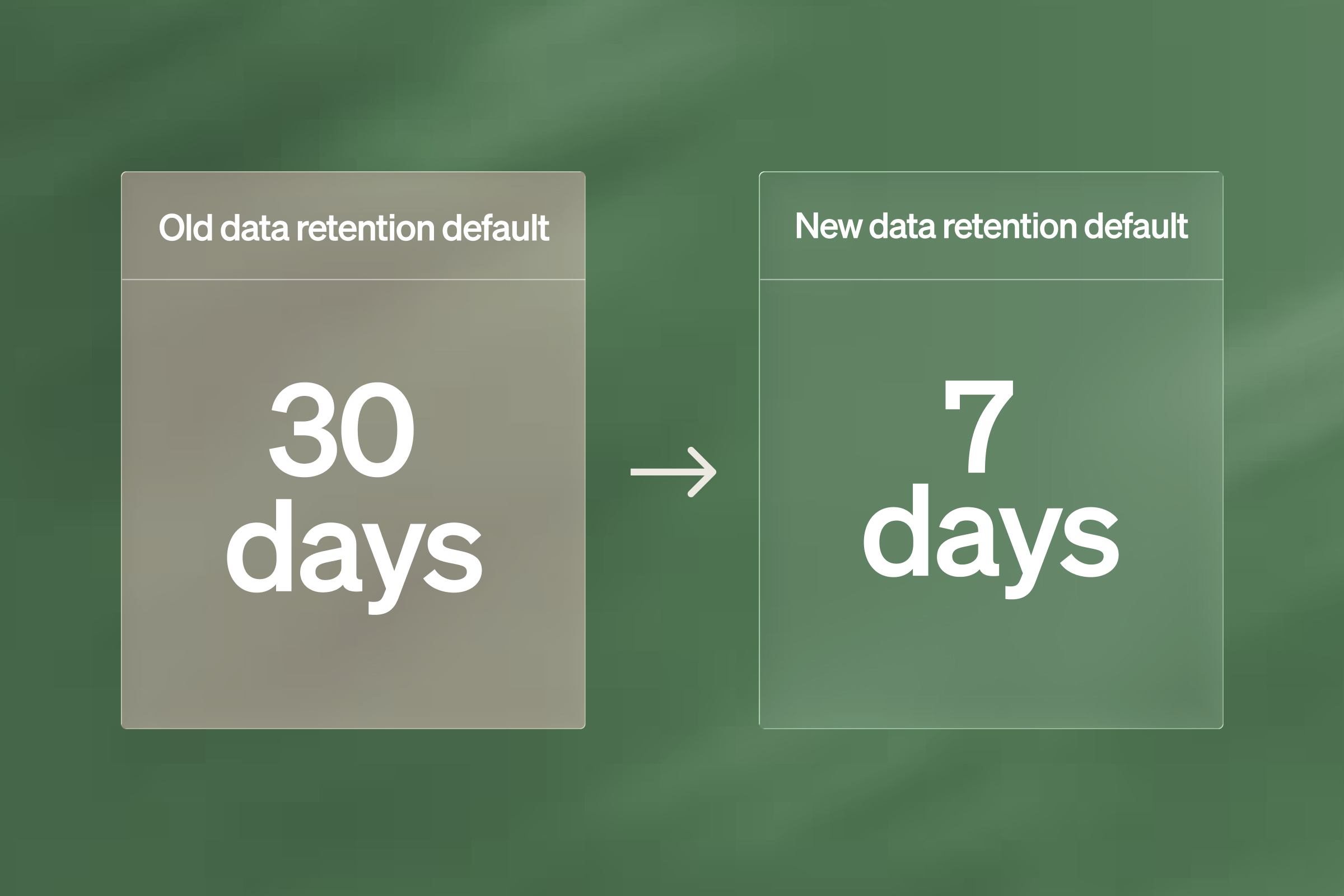
When we started Flock 9 years ago, we set the default ALPR retention period to 30 days, unless state or local policy decided on a shorter or longer period. We believed this struck a careful balance between safety and privacy.
Today, we are updating our recommendation and default to a 7-day retention, and introducing “Evidence Mode.” Our analysis shows that over 90% of searches without a full plate are done within a week. Evidence Mode, which will roll out in the coming weeks, addresses the exceptional cases that take longer: detectives can preserve specific ALPR data as evidence for an active investigation in cold storage, consistent with existing laws and policies.
Existing customers will keep their current, democratically approved retention periods. Customers who adopt the 7-day recommendation will receive Evidence Mode at no cost. Every community will continue to choose the retention period that fits its public safety strategy.
We are also introducing Offense filtering for sharing. Now, cities can choose which type of offenses are permissible for other agencies to access their cameras. For example, City A could allow City B to search its cameras only for a stolen vehicle, missing person, or violent crime while blocking searches related to immigration enforcement. This gives communities more control over data sharing while preserving collaboration where policies align.
Accountability
Abuse of Flock technology, at any level, is unacceptable. We have strengthened safeguards over the past nine years, from basic audit logs to proactive monitoring. 16 weeks ago, we introduced Audit Assistance, which detects abnormal activity and flags it for Administrator review. In recent weeks, those reviews have been associated with arrests of several law enforcement officers who allegedly abused the system. More than one-third of our customers have voluntarily adopted Audit Assistance.
We will now require all law enforcement customers to adopt this feature by the end of this year. In addition, we will institute proactive lockout. When a user’s activity meets defined criteria for abnormal behavior, Flock will automatically suspend access pending administrator review. The goal is to intervene before misuse becomes recurring or widespread.
In July 2025, we introduced an optional case code requirement for searches. Results from participating agencies have been promising, so we will now require case codes for all law enforcement searches by the end of the year. Agencies may bypass the requirement in emergencies, but every exigent search will be flagged for administrator review.
Data Ownership
From the beginning, we have been clear that our customers own the data captured by their ALPR cameras. This has always been the case, but some of our contractual language has confused the public on this crucial point. To make that commitment easier to understand, next week we will publish an easy to read / plain English explanation of our contract on our website, organized section by section. The principle is simple: customers own the data, decide who can access it, and choose who they share it with.
Data Security
Flock is committed to the strongest security program in the industry. This year we retained Bishop Fox, a leading independent security firm, to conduct a thorough review of our products and capabilities. We will publish its summary of findings and our remediations in September.
We're also launching a Coordinated Vulnerability Disclosure program (CVD). Flock’s CVD gives security researchers a safe, credited path to report and disclose their work while receiving recognition. Researchers can disclose issues at vulnerability.disclosure@flocksafety.com.
At the beginning of this month, we also made multi-factor authentication (MFA) mandatory for anyone logging into Flock, increasing our security standards for all customers.
Security is an ongoing responsibility. We will continue testing, improving, and updating our controls.
Data Accuracy
A recent story described a wrongful traffic stop involving an auto journalist. The central point is simple: an alert is a lead, not a conclusion, which should be confirmed by an officer.
Let me explain a little about how this technology works. Basic optical character recognition can see the numbers and characters on a license plate and report whatever it sees. Flock goes further, using machine learning models trained on plate designs from all 50 states, including stacked and undersized characters, and are retrained weekly as plate designs change. Every read carries a confidence score, and low-confidence reads are flagged as such, never presented as certainties and never sent as alerts to officers.
Recognition is only the first step. Before an alert goes out, the Flock system matches both the plate and the issuing state against the hotlist record. The system then filters out low-confidence reads before sending alerts to officers.
The final safeguard is human. Before acting, an officer visually confirms the plate and confirms the stop complies with law and agency policy. No stop should ever rest on an unverified alert standing alone.
This combined system of safeguards results in fewer than 9 human-reported errors for every 1 million alerts.
Transparency
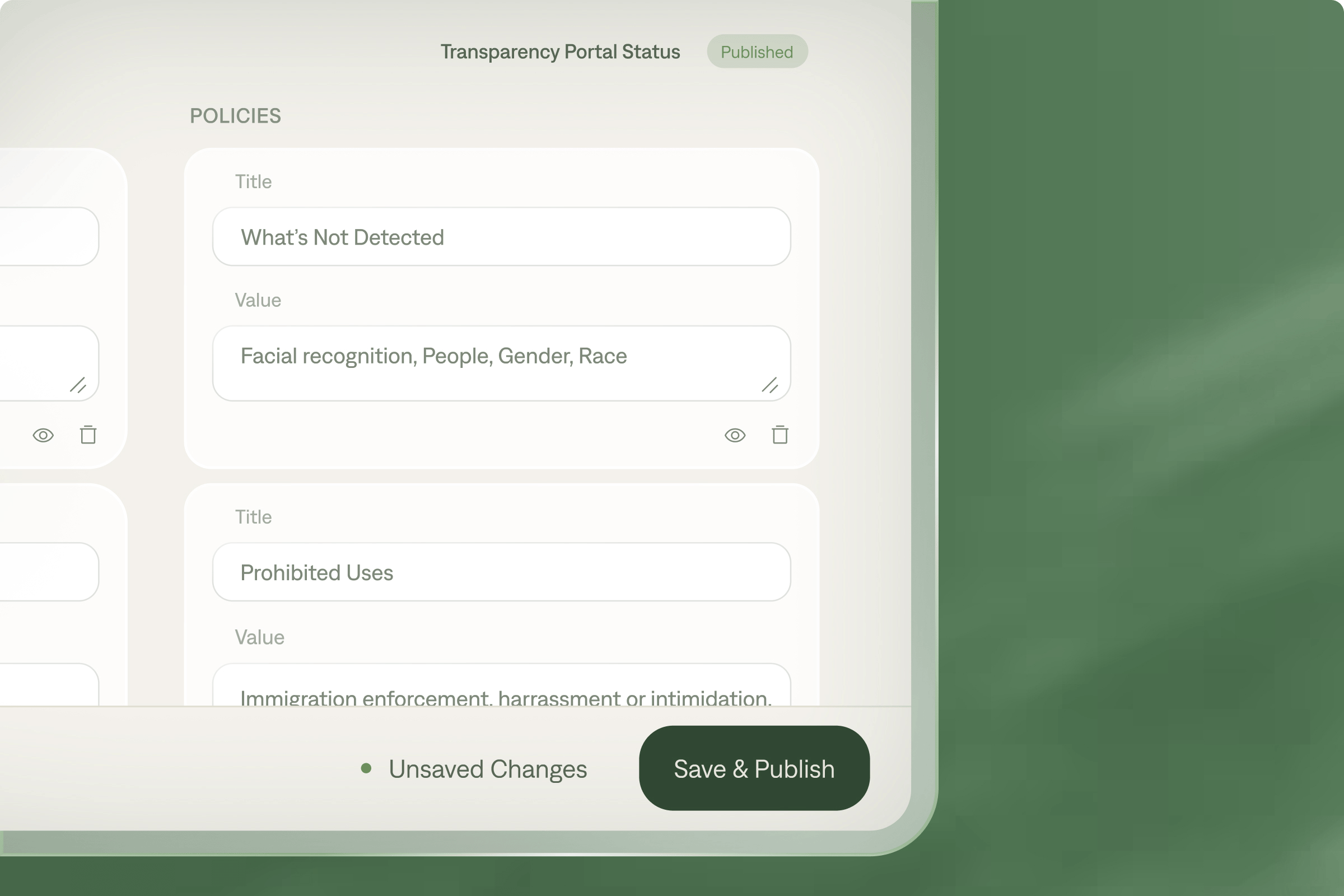
More than 1,500 agencies have published a Flock Transparency Portal. If your agency has not published one, please, turn it on. The portal gives your community a direct view of your policy, retention period, sharing partners, and search activity, in your agency’s own words.
Why Now?
Nine years ago, we set out to build a company that would make communities safer. Today, Flock technology assists your officers in more than one million crimes solved annually. In July alone, with your help, we detected over 1,000 missing people and over 20,000 stolen cars.
These changes reflect years of work and deliberation. They are not the end of that work, but simply the continuation of our commitment to both safety and privacy. We are not perfect, so we will keep listening, improving, and building a better standard for public safety technology together. You’ll receive additional updates from us in the weeks and months ahead as these changes roll out.


Protect What Matters Most.
Discover how communities across the country are using Flock to reduce crime and build safer neighborhoods.